What Is Task Management? A Complete Guide for Every Industry
Discover how structured task management, priority frameworks, and workspace automation transform operational efficiency across modern enterprise teams.

1. Introduction to Task Management
In today's fast-paced business environment, effective task management is no longer a luxury—it is the operational backbone of every high-performing team. Whether you are leading a software engineering squad, running a creative agency, or overseeing cross-departmental operations, how you track, organize, and execute daily deliverables directly dictates your organization's success.
At its core, task management is the systematic process of managing a task through its entire lifecycle: from initial planning and priority assignment to execution, tracking, and final completion.
According to recent productivity benchmarks, teams utilizing structured task management platforms report a 42% reduction in missed deadlines and save an average of 6.5 hours per employee each week previously lost to status update emails.
2. Core Components of a Task Management Framework
A robust task management architecture relies on four fundamental pillars that turn chaotic todo lists into structured, predictable productivity pipelines:
1. Prioritization & Tagging
Categorize tasks by urgency and impact (High, Medium, Low) to ensure your team focuses energy on high-value initiatives.
2. Ownership & Delegation
Assign every single item to an explicit owner with clear accountability, preventing tasks from slipping through the cracks.
3. Real-Time Status Tracking
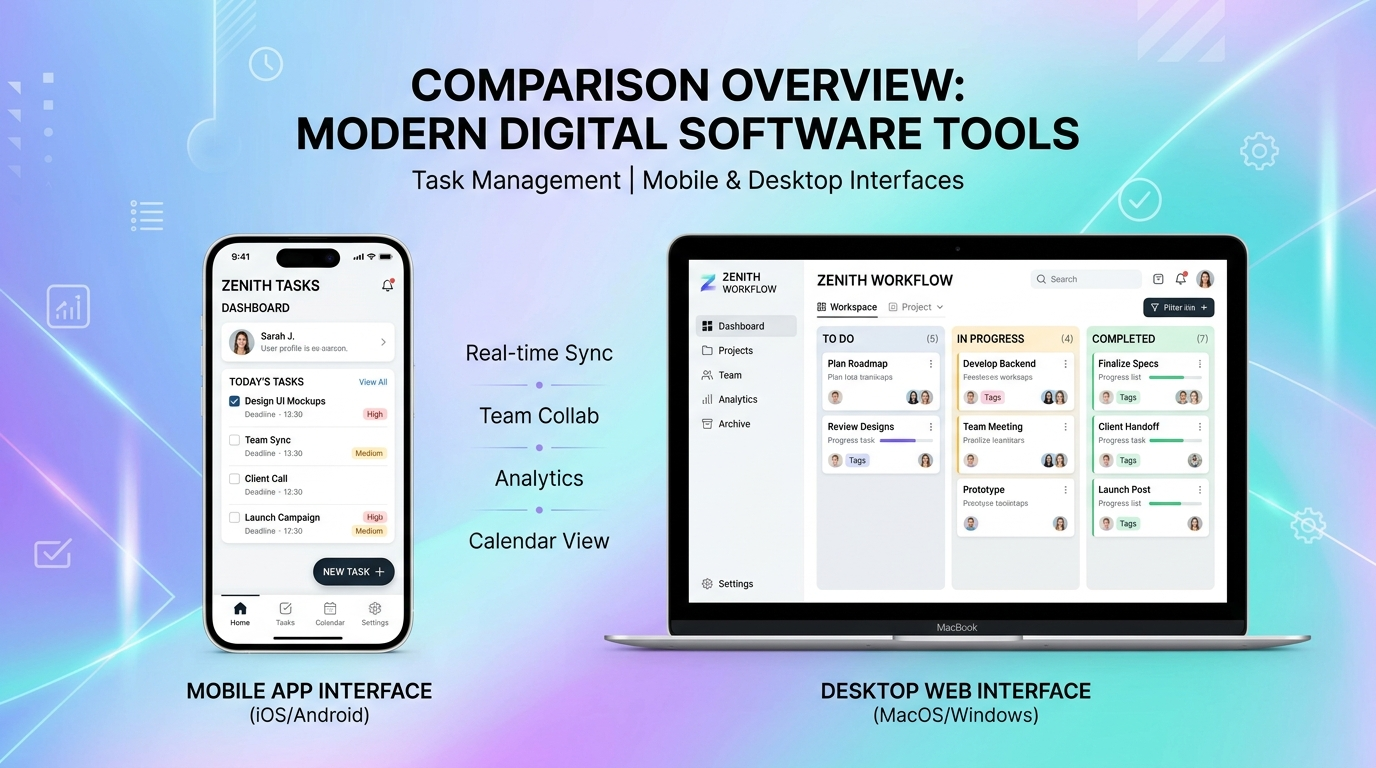
Maintain total visibility over work states (To Do, In Progress, Under Review, Completed) with visual Kanban boards and list views.
4. Deadline & Milestone Control
Set firm due dates, dependencies, and recurring schedules to keep complex deliverables progressing on time.
3. Task Management vs. Project Management
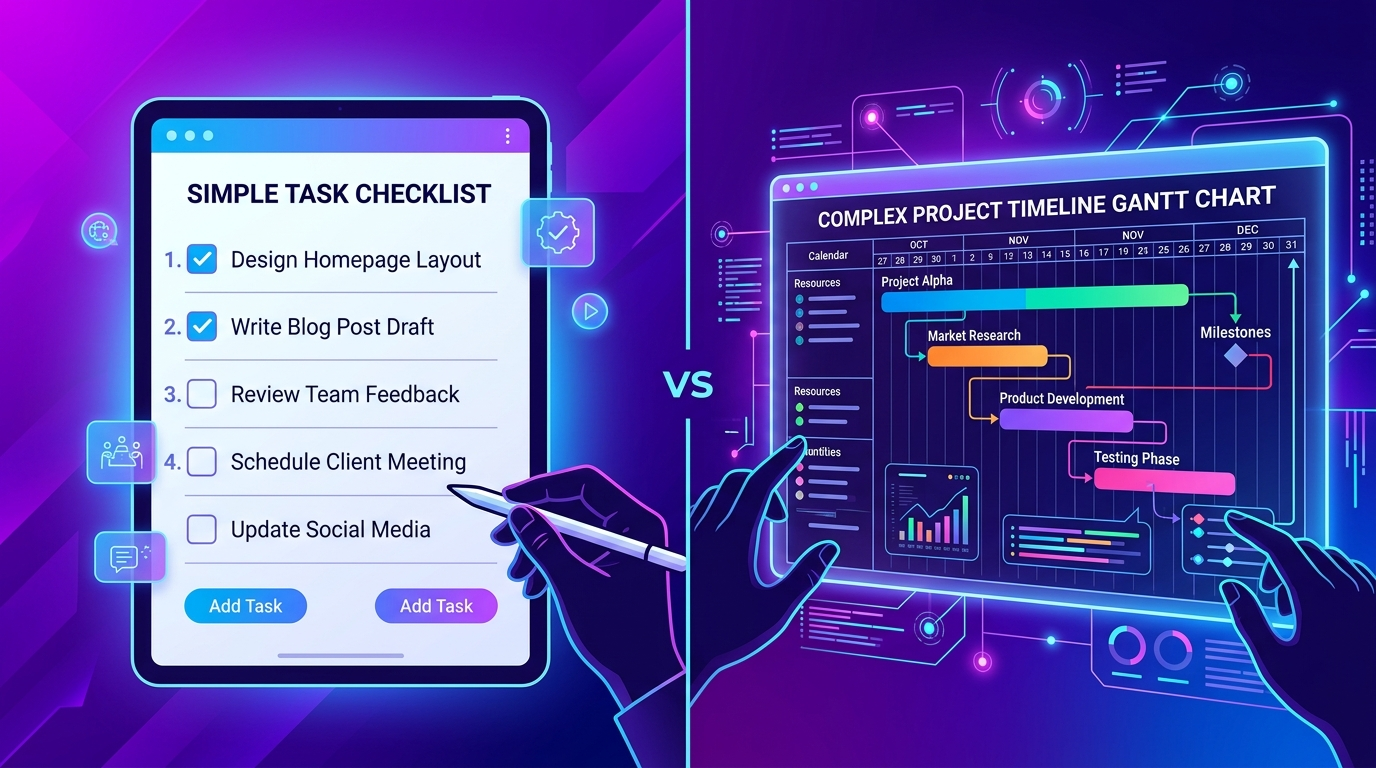
While often used interchangeably, task management and project management operate at different scopes within an organization. Understanding the distinction helps teams select the right tools for their daily workflow.
| Dimension | Task Management | Project Management |
|---|---|---|
| Focus Area | Individual action items & daily work units | Overarching goals, timelines & budgets |
| Scope & Scale | Micro-level (hours to days) | Macro-level (weeks to months/years) |
| Flexibility | High agility, dynamic reprioritization | Structured milestones & dependency roadmaps |
| Primary Metric | Completion rate & daily velocity | ROI, budget compliance & milestone delivery |
4. Key Benefits for Modern Teams
Adopting a unified task management system delivers immediate advantages across all levels of an enterprise:
1. Complete Operational Visibility
Managers gain a single source of truth for all ongoing work without micramaging.
2. Elimination of Communication Friction
Comments, file attachments, and approvals live directly inside the task card.
3. Balanced Team Workload
Prevent team burnout by identifying bottlenecks and redistributing tasks in real time.
4. Audit Trail & Accountability
Timestamped history records ensure total transparency for compliance and reviews.
"Workplace clarity is not about having more meetings—it is about having a system where everyone knows exactly what needs to be done next, who is responsible, and when it is due."
5. Best Practices for High-Performance Workflows
To get the maximum return on investment from your task management system, follow these field-tested principles:
1. Break Complex Deliverables into Atomic Tasks
Avoid vague items like "Redesign Website". Instead, split them into actionable sub-tasks such as "Draft Homepage Wireframe" or "Approve Color Palette".
2. Standardize Status Definitions
Ensure all team members share a unified definition of what "In Progress" or "Done" means to prevent misunderstandings.
3. Perform Weekly Backlog Grooming
Archive completed items, clean up stale tasks, and reprioritize upcoming work at the start of each week.
6. How AUM Task Transforms Team Operations
AUM Task is specifically engineered to streamline workplace productivity by combining interactive workspaces, Notes for Approval (NFA) workflows, team workload visibility, and personal todo management into one intuitive platform.
Experience real-time task management with custom workspace views, instant team sync, and effortless approval workflows.
Get Started for Free7. Summary & Final Takeaways
Mastering task management is essential for operating a resilient, efficient, and scaleable organization. By establishing clear priorities, assigning explicit owners, maintaining transparent status views, and utilizing modern tools like AUM Task, teams can convert operational complexity into structured achievement.